When Ships Age, Risk Changes
.webp)
What rising incident data may mean for South Korea’s coastal fleet
For most of modern shipping history, the age of a vessel was rarely treated as a defining safety variable. Ships were designed, maintained, and eventually replaced before operational risk began to accumulate in ways visible across fleets. That assumption is now quietly changing. Across the global maritime industry, vessels are remaining in service longer while casualty data is beginning to move in the opposite direction. According to DNV analysis, maritime incidents have increased by 42 percent since 2018, far exceeding the fleet’s growth.
For operators in coastal markets such as South Korea, where dense traffic intersects with demanding navigational routes, the implications are becoming difficult to ignore.
Many ships trading today were built during the shipbuilding boom of the early 2000s and are now approaching or exceeding two decades of service. These vessels remain classed and compliant with international regulations, but their growing age is beginning to reshape how safety risk appears across fleets.
For South Korea, this shift carries particular significance.
The country operates one of the world’s busiest coastal shipping systems, linking mainland ports to hundreds of islands through dense ferry and cargo traffic. These routes pass through narrow channels, island clusters, and complex coastal approaches where navigational margins can narrow quickly if awareness slips even briefly. At the same time, the fleet operating in these waters is aging. Research from the Korea Maritime Institute suggests that roughly 70 percent of vessels operating in South Korea are now considered aging ships, increasing pressure on maintenance cycles, crew workload, and operational oversight.
The consequence is not simply mechanical risk. It is a shift in how maritime accidents develop.
Rising incidents along the Korean coast
Recent accident statistics illustrate the trend. South Korea recorded 3,255 maritime incidents in 2024, representing a 5.3 percent increase compared with the previous year, according to the Ministry of Oceans and Fisheries. More concerning was the severity of those incidents. Fatalities and missing persons rose by 74.5 percent year-over-year, highlighting the growing consequences of operational failures at sea.
Collisions accounted for the largest share of serious accidents, followed by fires, capsizings, and sinkings. This pattern mirrors global casualty trends. As fleets age and traffic density increases, accidents are less likely to originate from a single catastrophic failure and more likely to arise from routine operations in which multiple conditions align.
In other words, maritime risk is becoming more operational than mechanical.
Aging vessels remain a concern in coastal ferry operations
South Korea has invested heavily in maritime safety reforms since the 2014 Sewol ferry disaster, which triggered a comprehensive review of passenger vessel regulation and fleet oversight across the country’s coastal routes. Supervision and operational standards have improved significantly since then, but aging vessels remain a structural challenge across parts of the domestic ferry fleet.
Many coastal routes operate under tight economic conditions where replacing ships is difficult, leading operators to extend vessel service lives beyond their original design expectations. These vessels remain compliant with classification and regulatory requirements, but many still operate with bridge systems and monitoring tools designed for a different era of operations.
Maintaining safety margins depends increasingly on how consistently bridge procedures and watchkeeping practices are followed during everyday voyages.
Age alone does not cause accidents.
How aging fleets change the nature of accidents
Classification rules and maintenance regimes ensure older vessels remain structurally sound and technically compliant even as they age. Instead, the risk profile changes more gradually. Maintenance complexity increases, crew workload grows as equipment ages, and legacy bridge systems may lack the monitoring capabilities available on newer vessels.
These conditions rarely produce a dramatic failure. More often they increase the importance of operational discipline during routine voyages. Small deviations in watchkeeping, delayed recognition of developing navigational situations, or reduced bridge coverage can erode safety margins before the risk becomes visible.
In aging fleets, safety becomes increasingly dependent on operational consistency.
The modernization gap
Fleet renewal cycles across the maritime industry have slowed in recent years. Strong freight markets, uncertainty around future fuel technologies, and rising shipbuilding costs have encouraged many operators to keep vessels in service longer than originally planned.
The result is what safety analysts increasingly describe as a modernization gap. Ships remain technically compliant, but their monitoring systems and operational visibility often lag behind modern expectations for fleet safety management.
When vessels are not replaced or significantly upgraded, maintaining safety margins depends increasingly on how effectively operators can observe and reinforce operational standards across their fleets.
When ships age, visibility becomes critical
Historically, most operational insight came from investigations conducted after an incident had already occurred. Voyage data recorders, crew reports, and casualty investigations provided valuable lessons, but they often revealed problems only after the opportunity for intervention had passed.
As fleets age, that reactive model becomes increasingly insufficient.
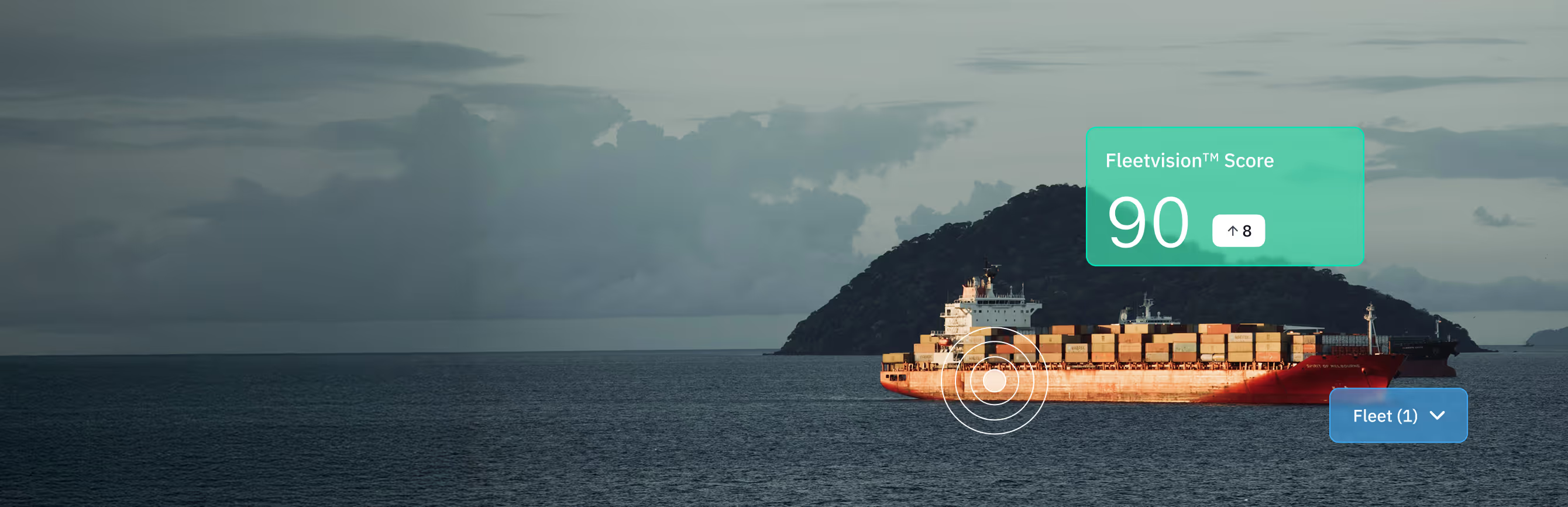
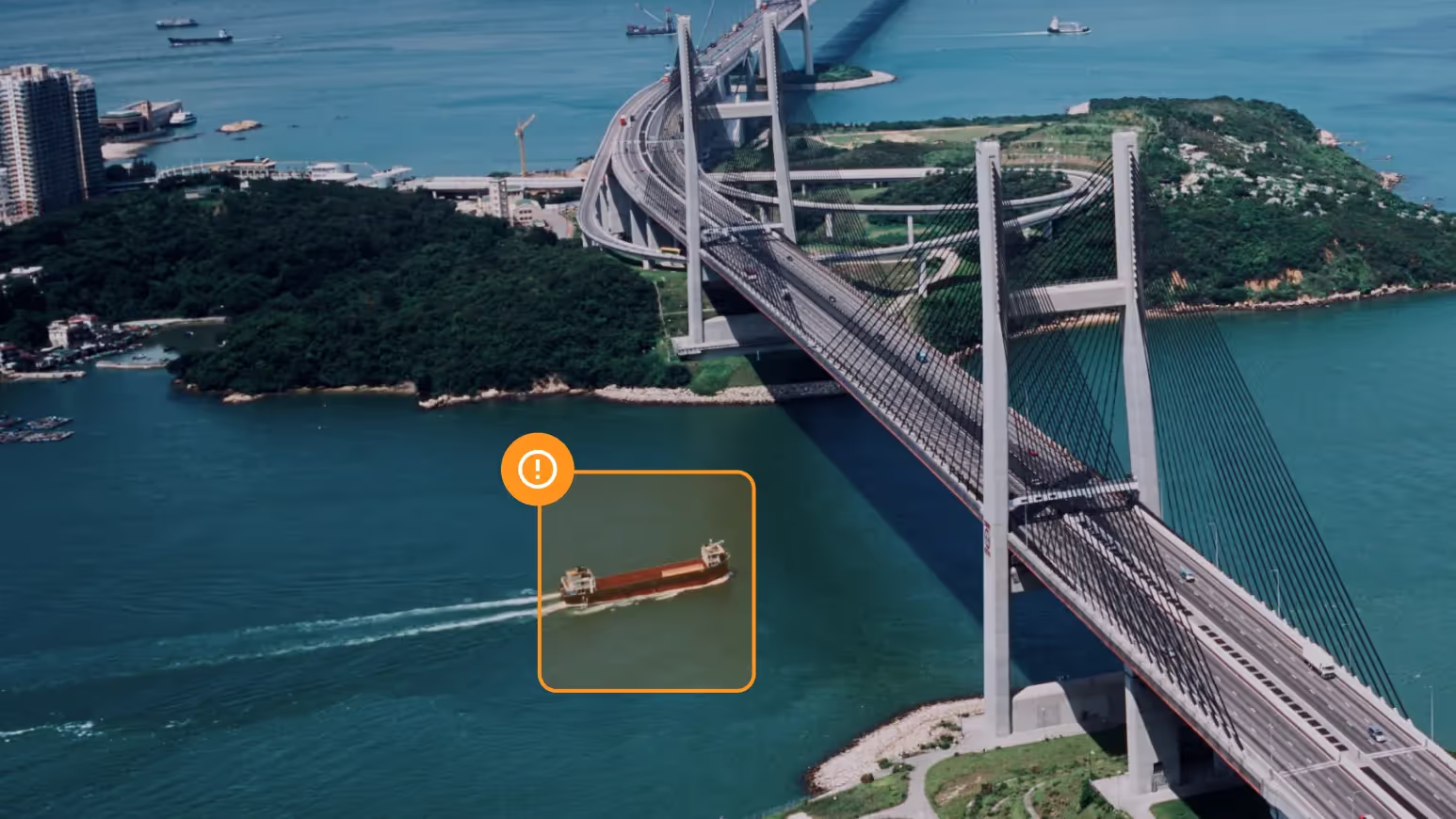
Operators need to understand how navigation and bridge operations unfold across everyday voyages, not only after something goes wrong. Platforms such as ShipIn FleetVision™ address this operational visibility gap by analyzing onboard video and operational data to provide fleet and safety teams with insight into how bridge practices evolve across vessels and routes. Patterns such as unattended bridges, deviations from watchkeeping protocols, or emerging navigational risks can be identified while safety margins still exist.
Used effectively, this visibility does not replace procedures or training. It strengthens them by helping operators detect operational drift earlier and reinforce consistent standards across fleets.
A new phase of maritime safety
The maritime industry has historically improved safety through better ship design, stronger regulations, and improved crew training. Those factors remain essential. But as the global fleet continues to age, another variable is becoming increasingly important: how consistently ships are operated across fleets and voyages.
For countries like South Korea, where dense coastal traffic intersects with an aging fleet profile, maintaining operational awareness may become one of the most important safety investments operators can make. When vessels remain in service longer, safety increasingly depends on the ability of fleet teams to see how bridge practices actually unfold during everyday operations.
This is where platforms such as ShipIn FleetVision™ are beginning to change how operators manage risk. By providing continuous visibility into bridge activity and navigational behavior across vessels, fleet and safety teams can detect operational drift earlier, reinforce best practices, and intervene before small deviations erode safety margins.
The ships themselves may not all be new.
But the way fleets understand and manage risk increasingly needs to be.